
It has been a week since a Collin County, Texas, jury convicted 19-year-old Karmelo Anthony of first-degree murder and sentenced him to 35 years in prison for the stabbing death of 17-year-old Austin Metcalf at an April 2025 high school track meet in Frisco.
The case gained national attention after it was racialized by Anthony’s family and his supporters, and a lack of cameras in the courtroom and questions about the ethnic makeup of the jury led to post-verdict controversy as well.
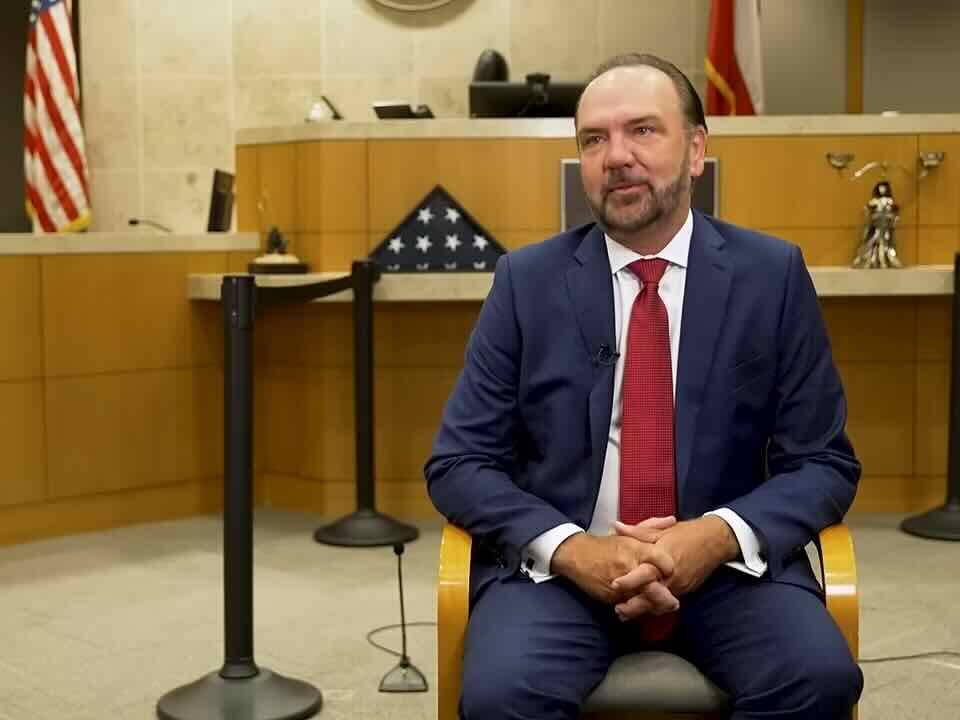
But after presiding over one of the most closely watched murder trials in Collin County history, the veteran judge who oversaw the case, Judge John Roach, stood by his decisions in a rare interview.
On Cameras in the Courtroom
Speaking with local ABC affiliate WFAA, Judge Roach was asked about one of the biggest flashpoints of the trial, the lack of cameras in the courtroom. He admitted what was reported by the media did not always reflect what was happening inside the courthouse.
“I’ll tell you, I got some reports of some things that were coming out of this courtroom, and I wondered to myself, ‘Were they even in the same courtroom that I was?’ It’s that bad,” Roach acknowledged. “And I think that’s tragic because I think, really, if you just listen to the case based upon the facts, you’d understand it so much better.”
He said it may have made sense to make at least the audio of the proceedings available to the public. “I will tell you this, I sometimes think maybe I should have at least the audio stream or something, so people could hear it,” Roach said. “But at the end of the day, I don’t think, no matter what, people are going to distort whatever happens or whatever they hear into their own agenda, and so what’s the point?”
On Thursday’s Megyn’s Kelly Show, defense attorney and MK True Crime contributor Mark Eiglarsh said even an audio-only stream would have gone a long way in a case like this.
“He asked, ‘What’s the point?’ The point is, at least there’s people like me and the two other guests who would have said, ‘No, that’s not accurate what you’re saying? We saw the testimony,'” he explained. “We were in the dark [and] reliant upon, I’ll use air quotes, ‘media entities’ who are telling us what’s going on inside the courtroom, so I think that he is actually reconsidering his decision.”
Attorney and self-defense expert Andrew Branca agreed, saying lies existed around other high-profile cases like the George Zimmerman and Kyle Rittenhouse trials but the difference was that people could watch and see for themselves what really happened.
“I watched every minute of both those trials so when the lies are put out there, as they inevitably are, you can have a credible, informed counter argument… This judge stripped that possibility away,” Branca lamented. “[Instead], we have to rely on journalists. Frankly, journalists often have their own agenda. They’re trying to spin their own narrative. But even when they’re being honest, they’re not lawyers. They don’t know what they’re not seeing; they don’t know what’s important.”
On Jury Selection
One of the major talking points from the start of the trial was the makeup of the jury. Of the 12 jurors and six alternates, there were no black individuals selected. Contrary to some reporting, however, the jury was not entirely white.
Fox News Digital reported that sources close to the trial confirmed, of the 12 jurors, three were racial minorities, including Asian and Indian, eight were women, and four were men. They also confirmed that of the 18 total jurors, including alternates, six were minorities.
When asked about the controversy, Roach stood by the selection process:
“Like I told you before, as long as I follow the law, I sleep well at night. And I’m telling you, I followed the law in that case. Did I know what the perception was going to be? Sure. I knew in the back of my mind what the perception was going to be. But I’m not here to satisfy perceptions. I’m not here to satisfy agendas. I’m not here to do any of those things. I’m here to follow the law, and I did it to a T, and I’m proud of that. Very proud of that.”
While Megyn said jury selection and effective assistance (i.e. the competence of Anthony’s legal team) will be “the appellate issue” in the case, she praised Roach for not backing down.
Former prosecutor and MK True Crime contributor Dave Aronberg said the fallout over jury selection further makes the case for cameras in the courtroom.
“That’s why we needed transparency and cameras in the courtroom because now you have the public saying, ‘Well, you intentionally struck black jurors. This is an unfair trial.’ And that is terrible because you want the community to buy into it, but, because there is no transparency here, now they just believe the worst,” he explained. “There is no set quota on how many members of certain groups have to be on a jury. You just have to have a fair process. And if someone gave an answer in jury selection that gets them struck, as long as they’re not being struck because of race, then it’s a legitimate system.”
That means it is very unlikely, in Aronberg’s view, the verdict would be overturned on appeal for that reason. “Judges get a lot of discretion when it comes to jury selection,” he added. “So, I think that even though they’ll use that on appeal, it’s unlikely to overturn this verdict.”
You can check out Megyn’s full interview with Aronberg, Branca, and Eiglarsh by tuning in to episode 1,342 on YouTube, Apple Podcasts, or wherever you like to listen. And don’t forget that you can catch The Megyn Kelly Show live on SiriusXM’s The Megyn Kelly Channel (channel 111) weekdays from 12pm to 2pm ET.