

President Donald Trump called Iran’s latest response to a U.S. proposal to end the war “totally unacceptable” and said the current ceasefire is on “life support” with a “one percent chance of living.” Iran, meanwhile, has claimed its counteroffer is “generous and responsible,” according to The Wall Street Journal.
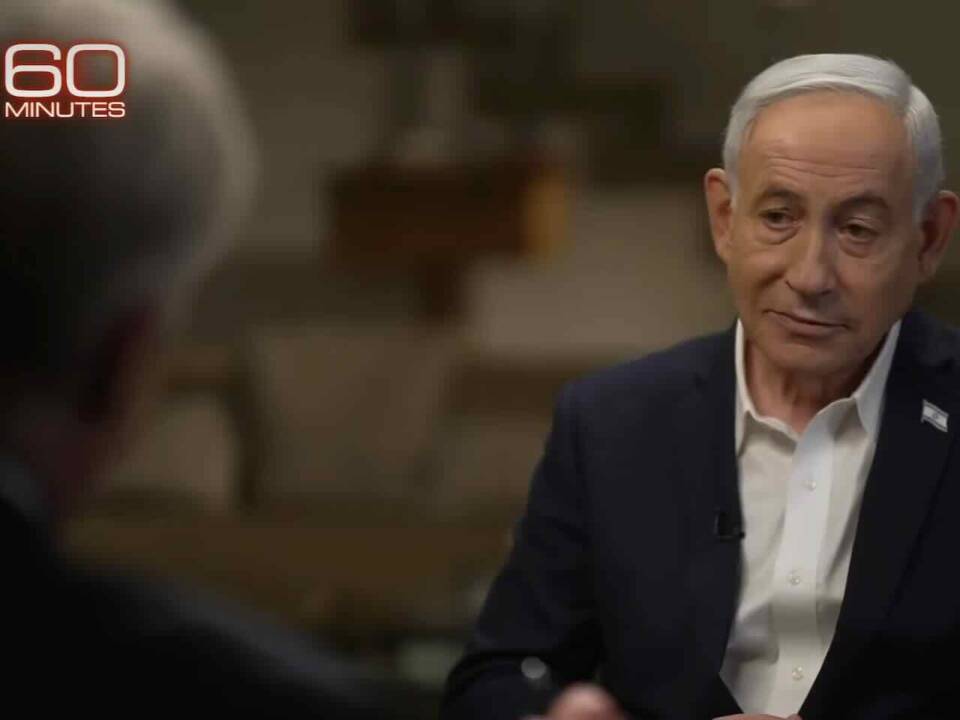
None of that sounds like the end of the conflict is imminent, which is what made what the leader of America’s partner in the war – Israeli Prime Minister Benjamin Netanyahu – said on 60 Minutes Sunday night all the more interesting.
The Interview
60 Minutes aired a decent chuck of correspondent Major Garrett’s interview with Netanyahu on CBS News last night. All told, the segment ran about 12 minutes, but the network also released the full 70-minute sit-down online thanks to President Trump’s 2024 lawsuit when he alleged the news magazine made misleading edits to an interview with Kamala Harris.
60 Minutes now posts many of its full interviews with newsmakers, and the ability to compare and contrast the edited and unedited tape has proven to be illuminating.
Unlike the questionable editing in the program’s March interview with Secretary of War Pete Hegseth, there was no smoking gun showing journalistic malpractice in the Netanyahu interview. But as Megyn outlined on Monday’s edition of The Megyn Kelly Show, there were some notable ways the edited piece differed from the actual full interview.
What Didn’t Air
The interview began with Netanyahu saying the war isn’t over. Here is an extended version of his answer that is slightly longer than what you might have seen on television Sunday night:
GARRETT: Is the war with Iran over, and if it isn’t, who will decide when it is?
NETANYAHU: I think it accomplished a great deal. But it’s not over because there’s still nuclear material, enriched uranium, that has to be taken out of Iran. There’s still enrichment sites that have to be dismantled. There are still proxies that Iran supports. Their ballistic missiles that they still want to produce. Now we’ve degraded a lot of it, but all that is still there, and there’s work to be done.
GARRETT: How do you envision the highly enriched uranium will be removed from Iran?
NETANYAHU: You go in and you take it out
GARRETT: With what? Special forces from Israel, special forces the United States?
NETANYAHU: Well, I’m not going to talk about military means, but the President– what President Trump has said to me, I want to go in there, and I think it can be done physically. That’s not the problem. If you have an agreement, and you go in, and you take it out, why not? That’s the best way.
GARRETT: What if there isn’t an agreement? Can it be taken out by force?
NETANYAHU: Well, you’re going to ask me these questions. I’m going to dodge them because I’m not going to talk about our military possibilities, plans, or anything of the kind.
GARRETT: And I’m just trying to get at how long is it going to take to achieve that aim?
NETANYAHU: I’m not going to give a timetable to it, but I’m going to say that’s a terrifically important issue.
Megyn said the prime minister’s response is especially important when you consider the latest reporting from The Atlantic that President Trump has grown tired of the war. “They report in the Atlantic [that] he is… ‘bored’ with this war. That’s the second report using that exact term,” she noted. “But you can see this guy feels differently. He is not going to talk about timing lots of important missions yet to be done in Iran.”
Here was Netanyahu’s answer on that infamous meeting in the White House Situation Room from February when he reportedly persuaded President Trump to start the war. Again, this is a bit longer that what aired in the broadcast version:
GARRETT: The New York Times on April 7, reported the following about a fateful meeting February 11 in the White House. And the New York Times reports as follows, quote, ‘In the Situation Room on February 11, Mr. Netanyahu made a hard sell, suggesting that Iran was ripe for regime change, and expressing the belief that a joint U.S.-Israeli mission could finally bring an end to… the Islamic Republic. Is that correct?
NETANYAHU: No, that’s actually incorrect. Because–
GARRETT: In what ways is it incorrect?
NETANYAHU: It’s incorrect in the sense that I said, Oh, well, it’s guaranteed we can do it and so on. I didn’t say that. We both understood that we have little time to act because otherwise they’d get nuclear weapons. We both understood that we have little time to act because otherwise they’ll bury underground their ballistic missile capabilities. But while we were we said that part of the action would be the removal of the leadership and other measures, there was uncertainty. And we said, all this, you know, is uncertain. If you ever, you know, engage in military operations–
GARRETT: In the confines of that conversation, you noted the uncertainty?
NETANYAHU: Not only did I note it, we both agreed, you know, that there was both uncertainty and risk involved.
In a similar vein, Garrett pressed Netanyahu on why the United States and Israel didn’t anticipate Iran closing the Strait of Hormuz, which has had a dramatic impact on the world economy. Most of this answer didn’t air on TV:
NETANYAHU: I don’t claim perfect foresight, and nobody had perfect foresight. Neither did the Iranians. They should have figured out that that’s what’s coming.
GARRETT: Did you say that most of these risks would be minimal?
NETANYAHU: I don’t remember using that language. And I–
GARRETT: Would that be a fair interpretation?
NETANYAHU: No, I would say, I would say that the overall conception was that this would elicit a problem response that they probably would not shoulder, but they did shoulder and now they’re responding, they’re attacking. They’re being attacked accordingly.
Megyn took issue with the prime minister’s framing. “Did Netanyahu and Israel not anticipate that? I have a very hard time believing that. I mean, their intelligence is second to none… Their intelligence was really good on the Ayatollah’s whereabouts and his plans… but they didn’t anticipate that they could effectively take control of the Strait of Hormuz,” she wondered. “Or did they just not care because their goal is chaos in the Middle East, which benefits them, and our goal is very, very different? Our goal is not chaos in the Middle East. We have a lot of friends and partners and allies there, with whom we do great business and whose relations with us have only been getting stronger, and that’s a good thing for the United States.”
In a notable editorial decision, 60 Minutes chose not to air any part of Netanyahu discussing how long the war could last. This is what he said when asked:
NETANYAHU: …We had our brave pilots and your brave pilots over the skies of Tehran, over the skies of Iran, that changed. That broke that mask of invincibility. And once that happens, once that happens, that regime, I think, their days are numbered. But it could take a lot of days, I grant you that. And if you say, how long would it take, this war? I think a lot has been accomplished in a very short time. It’s not going to take years. It [unintelligible] take months.
GARRETT: It better not take months?
NETANYAHU: It may not take months. It depends. It depends a lot. I don’t want to put a schedule on it. I think there’s a mission schedule. There are goals to be achieved. But so far, I think an enormous amount has been done in a very short time.
“So, are we going to be perpetually ‘months’ away from ending the war, just like Iran was perpetually ‘weeks’ away from obtaining a nuclear weapon in the years before Operation Epic Fury,” Megyn asked. “This is sounding like the Iraq war clips we brought you when this war began back in March.”
The Social Media Factor
Several sections of the interview focused on how support for Israel has declined, especially among young people, and what could be causing that. Megyn played an excerpt from the full interview from which her team removed a lengthy aside from Netanyahu about Israel not targeting civilians. Here is how that went:
GARRETT: This idea that a younger generation on social media are scrolling. Do you believe Israel is at risk of losing this war on that social media front, meaning what is being portrayed, what is being said? And this is particularly, I believe, important in America for younger Americans, Republican and Democrat, who have hardened themselves against Israel, scrolling through images which tell them that there is something not as you describe, but uncivilized, and they would use words like ‘barbaric’ in Gaza and in Lebanon.
NETANYAHU: …We have seen the deterioration of the support for Israel in the United States almost, I would say, correlates almost 100 percent with the geometric rise of social media. And that, by itself, is not what caused it, and I don’t believe in censoring them or anything. But I’ll tell you what happened. We have several countries that basically manipulated social media with bot farms with fake addresses to break the American sympathy to Israel, to break the American-Israeli alliance because they think it’s in their interests. And they do it in a clever way, you know. It’s like you hear a text message, ‘I am a red-blooded Texan. I always supported Israel, but I can’t stand what they’re doing. I’m turning against Israel.; And then you trace the address to some basement in Pakistan, you know. And that’s, that’s something that has hurt us badly.
The version that aired on television included some of what Megyn played, but it was combined with a section from the very end of the interview that focused on Israel’s tactics to respond to the sentiment shift, not the shift itself. Netanyahu even picked up Garrett’s phone to make his point. This was the final exchange in the 70-minute sit-down:
NETANYAHU: …Again, you can say anything because it’s this [picks up Garrett’s phone]. This is yours, right? You’re not immune either. Because you can penetrate this machine. You can penetrate this, this little instrument. And you can say about Major Garrett anything you want. And I can paint you as a monster and if I say it often enough, enough people will believe it. I am not bemoaning this [puts Garrett’s phone down]. I’m stating this as a fact. Israel is besieged on the media front, on the propaganda front, and we’ve not done well on the propaganda war. We have to fight back against these lies, this propaganda, with the only weapon we have. It’s the truth. I’m trying to do that now, and we’ll try to do that in a much greater effort…
In the broadcast, these two moments were shortened and combined as if they happened back to back. They didn’t include the comment about how Israel will be fighting back, suggesting that they will use the same tactics to fight fire with fire on this social media front.
Netanyahu said that several times during the full interview, but none of it made the broadcast segment. There were also several mentions that the Americans who have turned against Israel also hate the U.S., a talking point, Megyn noted, that has been used by prominent pro-Israel media voices in the past few weeks. All of those references were cut also from the edited piece that CBS viewers saw Sunday night.
“Why? Why did Bari Weiss and her CBS cut from the interview of Netanyahu all the references by Netanyahu attacking Americans who have questions about Israel as anti-American. Is it possible they believe that might make him look bad and further alienate Americans,” Megyn wondered. “I mean, I think there’s a level of protection being run now on a foreign leader that’s just obvious. It’s as plain as the nose on your face, and you have to ask yourself why and whether we’re allowing this.”
Megyn opened up about her personal experience on social media in recent months and broke down the truth about Israel’s propaganda effort to combat what they claim is the propaganda against them. Watch:
You can check out Megyn’s full analysis by tuning in to episode 1,314 on YouTube, Apple Podcasts, or wherever you like to listen. And don’t forget that you can catch The Megyn Kelly Show live on SiriusXM’s The Megyn Kelly Channel (channel 111) weekdays from 12pm to 2pm ET.