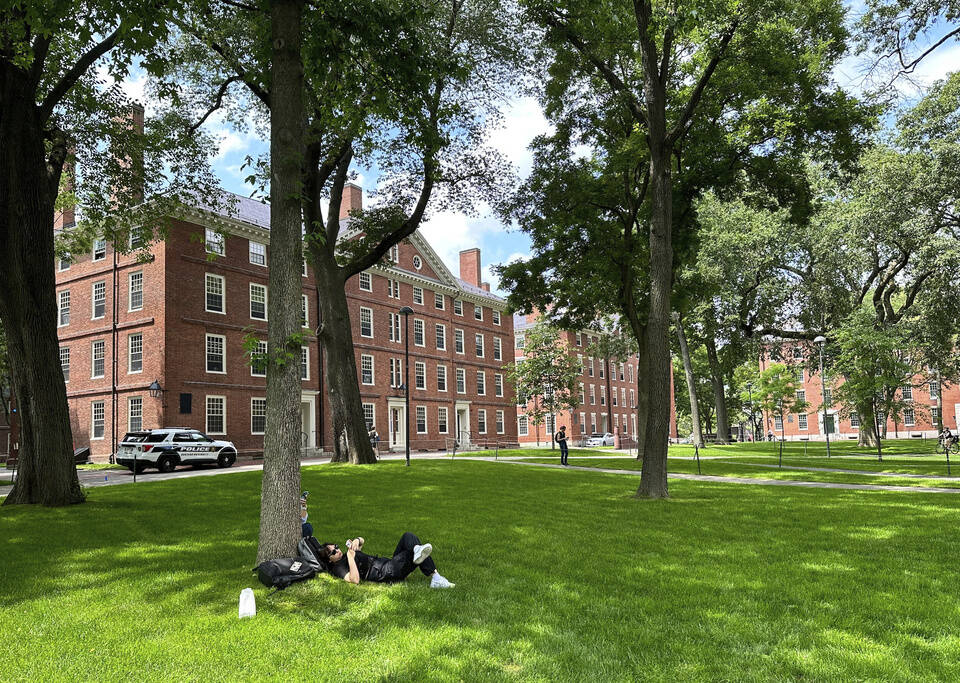
Nearly half of the colleges included in a new nationwide survey received a failing grade for their campus speech climate.
The Foundation for Individual Rights and Expression (FIRE) found 121 of the 261 schools in its annual College Free Speech Rankings earn an F, while 30 percent of students say violence can be acceptable, at least in rare circumstances, to stop someone from speaking on campus. That marked a four-point decline from last year.
The report comes one year after Charlie Kirk was assassinated at Utah Valley University while engaging students in political debate. UVU fell from 71st place last year to 210th this year, with students reporting growing self-censorship and declining comfort expressing controversial views.
Free Speech on Campus
At UVU, Charlie Kirk now ranks as the single most difficult subject for students to discuss. Nationwide, he ranks third behind the Israeli-Palestinian conflict and President Trump. On Tuesday’s AM Update, FIRE president and CEO Greg Lukianoff explained how Kirk’s assassination continues to shape campus speech one year later:
“I visited Utah Valley not to about a month after Charlie was murdered, and it was clear that both students had come together trying to recover from witnessing something so terrible, but it was also clear that students were still afraid to talk about it, and and we’ve seen this trend nationally: is that students all over the country, you know, are afraid to even discuss the murder of Charlie Kirk. It’s been added to the list of radioactive topics on campus.”
Researchers examined not only which subjects students avoid but how often they censor themselves, whether they tolerate controversial speakers, and whether they trust administrators to defend free expression when controversy erupts. As Lukianoff explained, the findings complicate a growing perception that the campus culture wars of the past decade have begun to fade:
“I think there’s like a sense that sort of, like, ‘Woke 1’ was over, but that’s just not true, and I do think that we continue to expand the number of things that people can’t talk about. Meanwhile, you know, it’s turning off a lot of people from higher ed, particularly young men. So I think it’s going to higher higher ed, which could potentially decrease our polarization, is, you know, turning it up to 11.”
Best and Worst Schools
Some universities showed how dramatically a campus can improve, while others continue losing the trust of their own students. Lukianoff pointed to the factor he believes most clearly separates the two:
“Overwhelmingly, what distinguishes a good school from a bad school is leadership. That’s been made very clear by schools like Dartmouth and Vanderbilt, that are both in the top 10 now. They weren’t always great on free speech. They got excellent leadership, and they rocketed up the charts, and they really mean it. [University of] Chicago has a combination of great leadership, but also a reputation for being a place where people can actually talk and more serious-minded students tend to go. So it’s hard to beat a place that has that long-standing reputation where they get the kind of students already mature enough to talk across lines of difference. NYU, though, I mean, you know, a lot of the schools in New York, also Columbia. I mean, they just don’t seem to know what they’re doing at all, and their students, appropriately, don’t trust them.”
The University of Chicago took the top spot for the third time in seven years, while New York University finished last. The overall picture remains bleak, though the FIRE report said this year’s findings provide some reasons for cautious optimism. The number of schools receiving failing grades fell from 166 in 2025 to 121 this year, though just 24 schools receive a C or better.
The average campus score reached its highest level since the rankings began seven years ago, though that average corresponds to a D-minus on the report’s grading scale. Lukianoff shared what the University of Chicago, the highest-scoring school in the rankings, would need to do to earn an A:
“I think some of the easiest stuff that they could do is decrease the number of students who think violence is okay in response to free speech. They already have a relatively low number of those students, but I still think it hovers around 20 percent which is nuts. A lot of students are coming in believing that they have a right to decide for everyone else who they can hear, and that’s something that that schools should be actively screening against.”
Lukianoff argued that the message should begin before students ever arrive on a college campus:
“If it came down from Yale and Harvard and all these schools to the big K through 12 theater schools, to say, listen, if we if it indicated to us that you’re the kind of person who believes that they have a right not to hear things that offend them and nobody else may either, that we don’t want you, that would change attitudes quick. They could work it into the essays. They could talk about tolerance and curiosity. There’s a million ways higher ed could fix this.”
You can get all the day’s headlines by tuning into the AM Update with Megyn Kelly on YouTube, Apple Podcasts, or wherever you like to listen. And don’t forget that you can catch AM Update on SiriusXM’s The Megyn Kelly Channel (channel 111).