

The U.S. Supreme Court handed down one of its most anticipated decisions on the last day of its term.
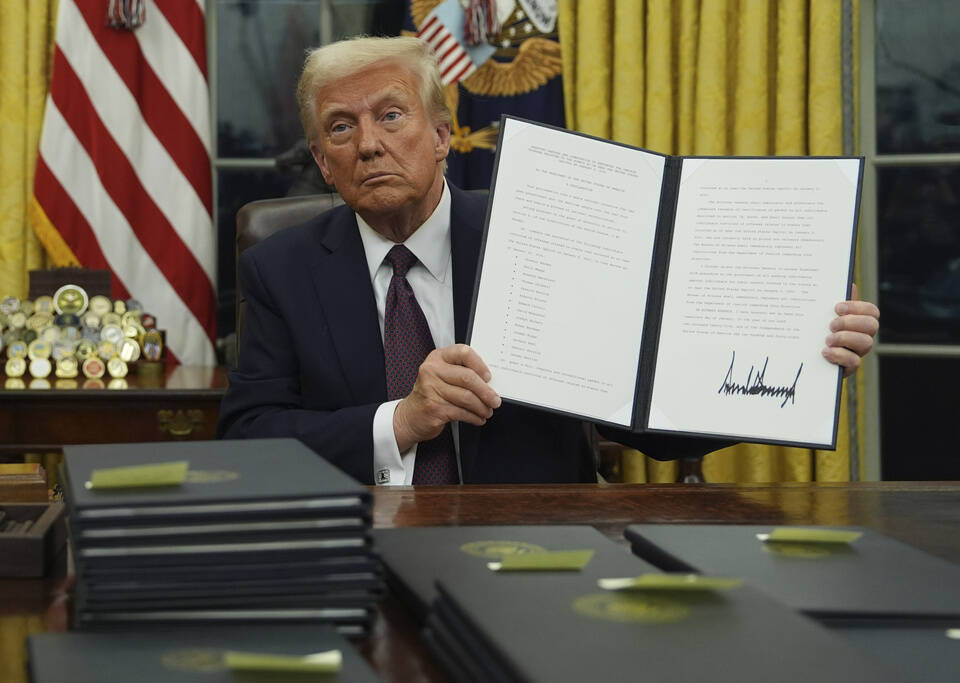
In a setback to the Trump administration’s immigration agenda, the court struck down President Donald Trump’s executive order that ended birthright citizenship – particularly aimed at the children of illegal immigrants – in Trump v. Barbara.
The Ruling
A five-justice majority – composed of the court’s three liberal justices, plus Chief Justice John Roberts and Justice Amy Coney Barrett – ruled the E.O. violated the Fourteenth Amendment. Writing for the majority, Roberts argued the constitutional reasoning behind the decision.
“Citizenship, then and now, was the right to have rights, to freely participate in our political community,” he wrote. “The Framers of the Fourteenth Amendment extended that promise to ‘every free-born person in this land.’ We keep that promise today.”
In a concurring opinion, Justice Brett Kavanaugh dissented with that majority argument, writing that Trump’s executive order only violated a federal statute, and it is a federal statute that can be amended by Congress.
The court’s three other conservatives, Justices Clarence Thomas, Neil Gorsuch, and Samuel Alito, dissented entirely, raising several concerns about the majority opinion. Alito specifically called out the national security implications.
“Suppose that a person’s only connection to this country is that he was born here to a mother who was present just long enough to give birth and then quickly returned to her native country. Suppose that country is a strategic adversary or enemy of the United States. Suppose the child never visited the United States while growing up and was inculcated with hatred of this country,” he wrote. “According to the Court, that person is a citizen of the United States.”
The Arguments
On Tuesday’s Megyn Kelly Show, Megyn admitted that she was initially skeptical of arguments against birthright citizenship but came around to the idea after learning more about its original intent. “The challenge to this was long before President Trump’s executive order. It was written by a legal scholar saying this is not what the founders intended,” she noted.
“Like many people… I, too, thought, what do you mean? This is sort of how we all grew up, thinking that if you’re born here, you’re a citizen, and that is kind of the end of it. If you actually look at the history of that practice here in the United States, and then what happened after the Fourteenth Amendment was passed, you see that’s wrong,” Megyn continued. “You find out that that is actually not the way the Fourteenth Amendment was treated, the way the founders understood this country would operate, and there was plenty of basis to strike down birthright tourism based on the particular phrasing of the Fourteenth Amendment.”
According to Article III Project founder Mike Davis, the decision amounts to the “most egregious [and] lawless” ruling in decades. “The Chief Justice, John Roberts, along with Justice Amy Coney Barrett, and the three liberals essentially scratched out half of the Fourteenth Amendment’s birthright citizenship provision – the ‘subject to the jurisdiction’ piece – meaning you have to be born in America, number one, and, number two, subject to the jurisdiction of the United States… which means allegiance to the United States,” he explained.
“The Chief Justice, Justice Barrett, the three liberals scratched out that second piece and essentially held that anyone who comes to America and has a kid gets birthright citizenship, including Chinese birth tourists, terrorists, human traffickers, illegal aliens, people who are here on vacation, you name it,” Davis continued. “You come to America, you give birth, your child gets birthright citizenship, meaning they get the golden ticket. They get all the privileges and all the rights of citizenship. They get social security numbers. They get to vote… They can get the other welfare benefits of being a citizen.”
In his view, that is not what anyone ever had in mind for the law. “I don’t think that the American people, we the sovereign citizens of America, the ‘we’ never agreed to this. We did not agree to this at our founding. We did not agree to this after the Civil War when we enacted the Fourteenth Amendment to overturn the Dred Scott decision to give birthright citizenship to the children of freed slaves. We didn’t agree to this in any subsequent Congress. We never agreed to this,” Davis argued. “This is the ultimate betrayal by the Supreme Court of the United States.”
Famed attorney and legal scholar Alan Dershowitz said the problem, in this case, is not so much the ruling but the Constitution itself. “Birthright citizenship [is] the dumbest idea ever conceived of anybody. No smart person would ever put birthright citizenship in a Constitution. Almost no other country in the world has it… It was never intended to cover people from China who come here to give birth and then go back and have no relation to the United States. That’s all clear,” he acknowledged.
“The problem is the wording of the Constitution. The wording of the Constitution is dumb, but it’s there,” he noted. “So… I can understand a real conservative textualist, like our dear friend [former] Justice [Antonin] Scalia, saying, ‘I’m not empowered to change the Constitution. Constitution says born in the United States, subject to jurisdiction there. Yeah, maybe.'”
A Legislative Alternative?
As Dershowitz explained, there are two ways to fix that problem. The first would be to amend the Constitution “to make sense,” though that would require the approval of two-thirds of Congress and three-quarters of the states and is highly unlikely.
The second option is to pursue the legislative pathway outlined by Justice Kavanaugh. “I think this is maybe the right textual decision but the wrong common sense decision, and I think Congress can overrule it, in effect,” Dershowitz noted.
“I do think that if Congress were to have hearings, were to bring people who would testify about people from China coming over here, giving birth, and leaving, and they were then to pass a statute saying people like that are not subject to the jurisdiction of the United States and, therefore, although they qualify, if they are subject to the jurisdiction of the United States, that’s a legislative matter. And legislatively, we now rule, under Article One of the Constitution, that people who have no allegiance to the country other than the accident of birth are not subject to the jurisdiction of the United States,” he outlined.
In a Truth Social post following the decision, President Trump signaled he would support any steps taken by Congress:
“The Supreme Court upheld Birthright Citizenship, which is too bad for our Country, but we can easily make it up in Congress through Legislation, with the support of the President, that has now been determined during this process. No long and unwieldy Constitutional Amendment is necessary! Congress should start TODAY to work on ending expensive and unfair to our Country, Birthright Citizenship. They will have my Complete and Total Support!”
Dershowitz said he would be happy to assist those efforts. “I still have hope that that could be done, and I have absolute desire to see Congress try to do that,” he said. “I’d be happy to testify. I’d be happy to help them on this. I think it’s really important for Congress to get into the act because executive orders are generally subject to much, much greater scrutiny by the Supreme Court because they’re not part of the Constitution, then are actions by Congress, which are Article One actions.”
And while six justices may have ruled against Trump’s executive order in this legal challenge, Dershowitz does not believe that would necessarily be the case under different circumstances. “It is dictum until you get legislation… because that issue is not before the court,” Dershowitz explained. “The issue of whether the legislature could change what it means to be ‘subject to the jurisdiction’ was not before the court and, therefore, anything the court says about [it] is merely dictum, it’s not holding.”
“It would be much easier to peel away a justice or two who could say, ‘This was merely dictum. That issue was not briefed and not argued; it was not decided. Now, we can decide it in the face of real legislation that we can look at,'” he added. “I think that’s the way the Supreme Court would deal with that issue.”
You can check out Megyn’s full interview with Davis and Dershowitz by tuning in to episode 1,350 on YouTube, Apple Podcasts, or wherever you like to listen. And don’t forget that you can catch The Megyn Kelly Show live on SiriusXM’s The Megyn Kelly Channel (channel 111) weekdays from 12pm to 2pm ET.