Update June 18, 2026, 2:35 p.m. ET: This article was updated with additional information about the deal.
After days of speculation, a senior Trump administration official shared the full text of the U.S.-Iran memorandum of understanding (MOU) in a briefing with reporters on Wednesday.
The 14-point MOU reflects what Megyn and Vice President J.D. Vance outlined earlier this week on The Megyn Kelly Show. It declares the end of the war, calls for Iran to reopen the Strait of Hormuz and the U.S. to lift its naval blockade, launches a new 60-day window for nuclear negotiations, waives sanctions so that Iran can sell oil during the negotiation period, and includes significant economic incentives if Iran ultimately agrees to sign a nuclear pact.
President Donald Trump signed a hard copy of the framework agreement at the Palace of Versailles in France following a G7 Summit dinner on Wednesday, and Iranian Parliamentary Speaker Mohammad Bagher Ghalibaf digitally signed the same document.
The MOU immediately drew criticism from the Iran war’s most ardent supporters on the right. On Thursday’s show, Megyn reacted to the deal and broke down how it will immediately help the U.S. economy. Watch:
She also explained why she believes it represents a realistic and common sense compromise to get out of the conflict. Watch:
Original article from June 16, 2026 below:
Hours after announcing the United States and Iran had reached a new agreement aimed at ending the war and reopening the Strait of Hormuz, President Donald Trump and Vice President J.D. Vance electronically signed the memorandum of understanding (MOU) on behalf of the U.S. on Monday.
While the formal signing ceremony is expected to take place Friday in Geneva, the MOU has not yet been made public. That has left many details of the agreement unclear and up for speculation, including what will happen to Iran’s nuclear program, whether the country will be able to charge tolls to ships passing through the Strait of Hormuz, and more.
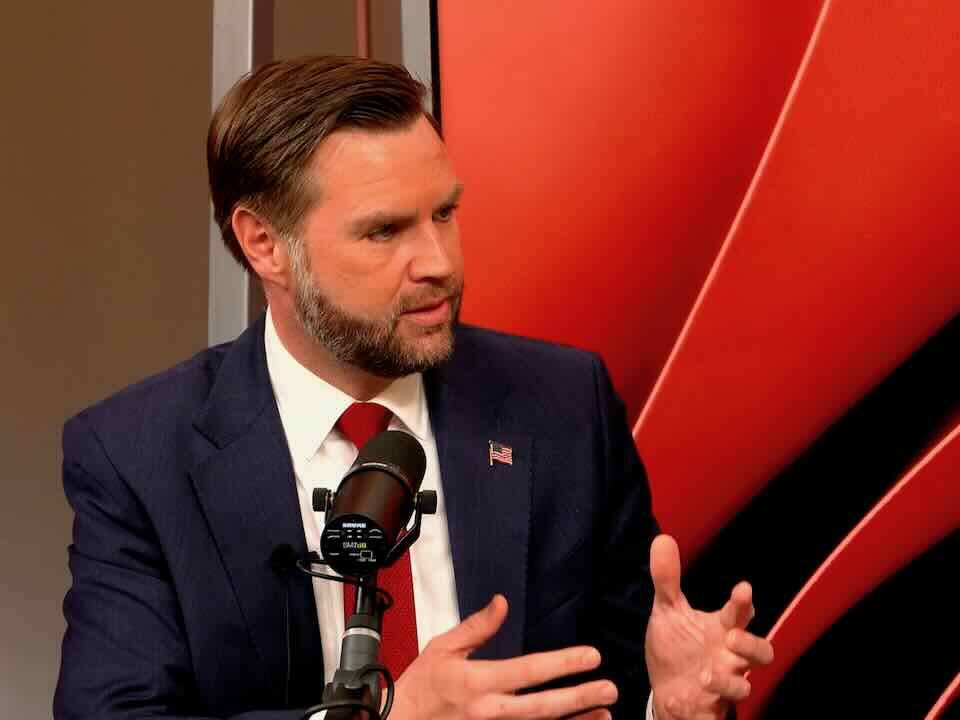
Vice President Vance has been a key part of the negotiation process and he joined Megyn on Tuesday’s show to discuss the deal and correct the “misinformation” and “conspiracies” he has been hearing about it.
Where the Deal Stands
In a nutshell, Vance described the framework of the deal as follows: “What it says is, effectively, the United States will open the Strait of Hormuz, lift the naval blockade, the Iranians will destroy the dust, and then hand it over, either to us or to an international organization. And the third part of it is, assuming they comply with the terms of the agreement, there are all of these economic benefits that can flow to the Iranians.”
He believes the Iranians have been cherrypicking elements of that “third part” when talking about the deal publicly. “If you’re an Iranian hardliner and you want to be out of this and you want to make this deal, but you don’t want to sort of pitch it a certain way to a domestic audience, what you do is you go through the document, you would identify everything the Iranians could get, and you say, ‘We are getting it,’ and then you underemphasize or don’t even talk about all the things that they have to give in order to get those benefits,” Vance posited.
In his view, this MOU represents a “fork in the road in this entire relationship with Iran” dating back nearly five decades. “For 47 years, we’ve obviously had basically a terrible relationship with Iran. They funded a lot of terrorist organizations. There’s obviously the nuclear issue that’s been in the background, going back well before Donald Trump even got on the political scene,” Vance explained.
“And here’s where we are right now: Their nuclear facilities are destroyed… Their ability to enrich uranium to implement their bomb completely destroyed. Number two, their economy is currently in shambles… The blockade and all of the other sanctions have had a very profound effect. And number three, they are in a position where what they’re saying is that they want to make long-term commitments to the United States and to the Gulf Arab countries to change their relationship.”
While the vice president said “that’s true whether they comply with this deal or not,” he admitted that the sincerity of the new regime remains to be seen. “If they comply with this deal, I think it’s much better for the United States, and it’s going to be much better for Iran,” he noted. “But if they don’t comply with the deal, the straits are still open, we’ve still done incredible damage to their nuclear program… we can get on with our lives as a country, and they don’t get anything.”
The Financial Component
When Megyn suggested that would include turning off the “financial spigot,” Vance said it has been turned off. “The way I put it, the financial spigot is already turned off. It’s been turned off for a very long time,” he explained. “In fact, we’ve probably turned the screws even tighter, but we can either unscrew the financial spigot or we can keep it where it is right now, which is fundamentally just very bad for the people of Iran.”
She pressed the vice president on what Iran would have to do to have the financial spigot turned on, and he was light on specifics of exactly what that would entail.
“A lot of this stuff is to be negotiated at kind of the technical level of detail, but it’s basically, if you think about it, we care about their attempt to rebuild their enrichment capacity; we care about this enriched uranium, this nuclear dust, as the president calls it; we also care about, are they getting along well with their neighbors, are they funding revolutions in their neighboring countries, are they funding terrorist organizations, or are they being good partners with the Gulf Coast coalition, and of course, other countries in the region; and what we’re saying is, the more that you do, the more we’re going to try to reintegrate you into the world economy,” Vance explained. “That’s the basic template of the deal.”
The Nuclear Question
Another huge piece of the deal that is expected to be further hashed out in future negotiations is what happens to Iran’s nuclear program. Megyn asked if “inspections” will be part of an agreement “when it comes to nuclear/enrichment” and if “enrichment [is] even on the table” at all.
“If they want the benefits of the bargain, enrichment is going to be on the table,” Vance said. “And more importantly, verification inspections is going to be on the table.”
“That means we let them do it a little? Like, what else are we expecting,” Megyn asked.
“No, look, our plan is, well, what we’d be inspecting is the full part of building a nuclear weapon,” the vice president responded. “I’m hardly a nuclear engineer, so the scientists are going to have to forgive me for this summary, but building a nuclear weapon is the infrastructure to enrich uranium; it’s the infrastructure to turn enriched uranium into nuclear fuel; it’s the infrastructure to turn that nuclear fuel into a bomb that you can detonate; it’s the delivery mechanism that bomb.”
“Our plan under this deal is, again, the Iranians need a lot of benefits, so long as they dismantle that nuclear weapons program,” Vance added. “And again, people always ask me, why do you believe in this time? I don’t believe them… I don’t trust anything that anybody says. I trust what people do, and the way this deal is structured is that, as they do more, they receive more, as they do less they receive less. That’s the basic structure.”
Comparisons to JCPOA
As it relates to the comparisons between this agreement and the Obama administration’s controversial Joint Comprehensive Plan of Action (JCPOA) with Iran, the vice president said he believes there are substantive differences.
“There is always this question about how is this the same, how is this different from the JCPOA – the Obama deal that you know Republicans have been very critical of for 10, 15 years – and I actually think I can walk you through the substantive differences between what we’re talking about and what the Obama deal did,” he said. “But fundamentally, how did the Gulf Arab countries, the Gulf Coast coalition, how did they respond to the Obama JCPOA? They hated that deal. They thought it empowered Iran. They thought it did nothing for them. They weren’t consulted. They weren’t a participant in the process.”
“How do they feel about this Trump peace plan? They love it because they see it as a genuine opportunity to transform how the Middle East has worked for the next couple of generations,” Vance said. “So, I think we have a real opportunity here. But regardless, if it just ends in Iran’s nuclear program is destroyed, the war is over, the Straits of Hormuz are opened, that’s a great place for the United States to be in.”
Then vs. Now
With that in mind, Megyn asked Vice President Vance how what he described is any different from where things stood before the U.S. entered the conflict on February 28. “Well, we did additional destruction to their nuclear facilities and, particularly, their capacity to rebuild,” he responded.
While Vance said some talking heads or officials may have been focused on regime change or other aspects of the war, he said President Trump was focused on eliminating the threat Iran posed to the region. “What the president always said is, we want to destroy their ability to project power across the Middle East,” he explained.
“Obviously, people always talk about Israel… but it was also the Gulf Coast coalition, the Arab countries of the Gulf, who were practically petrified of the role that Iran played, of their ability to project power, of their ability to launch missiles and hit some of these energy facilities. But then also that industrial base that produced missiles was also useful in rebuilding their nuclear capacity, right,” he continued.
“So, what we’ve done, fundamentally, is destroy that conventional military capacity, also destroyed their ability to rebuild their nuclear program, and then what we have an option to do – and again, it really depends on what the Iranians respond with – what we have an option to do, I think, is fundamentally transform our relationship with Iran.”
You can check out Megyn’s full interview with Vice President Vance by tuning in to episode 1,340 on YouTube, Apple Podcasts, or wherever you like to listen. And don’t forget that you can catch The Megyn Kelly Show live on SiriusXM’s The Megyn Kelly Channel (channel 111) weekdays from 12pm to 2pm ET.