

The Trump administration is directing resources toward uncovering the root causes of chronic health problems affecting millions of Americans, including the sharp rise in food allergies impacting millions nationwide.
Food allergies now affect roughly one in 10 adults and one in 13 children, which has a tremendous impact on families, schools, and communities – from allergen-free classrooms to the growing financial burden of lifesaving medications like EpiPens.
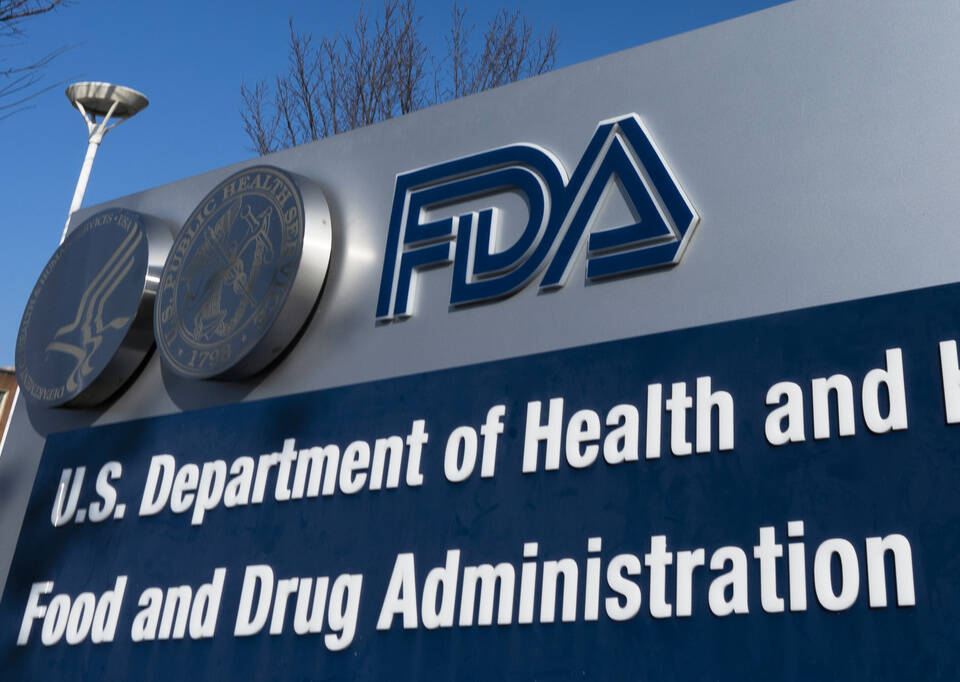
As reported on Thursday’s AM Update, FDA Commissioner Dr. Marty Makary convened a high-level expert panel on food allergies. The Wednesday meeting brought together leading researchers and physicians to examine what is driving the surge and how to stop it.
The Expert Panel
During his opening remarks, Commissioner Makary explained what has changed in recent years. “If you haven’t noticed, society over the last 25 years has transformed,” he said. “Kids with a peanut or food allergy now sit at their own table, or they can or cannot go into certain rooms or participate in certain activities in society.”
While he acknowledged that “food and peanut allergies are real” and “need to be taken seriously,” he asked the question on many people’s mind. “What happened? When we were kids, hardly anyone had a peanut or food allergy. Something happened,” Makary noted. “And look at the result: Kids can’t go out for ice cream their entire childhood for fear that the scooper has been cross contaminated and not rinsed appropriately after being used in a nut-based flavor… Schools and families have been burdened by the cost of having an EpiPen at all times everywhere they go.”
The commissioner suggested the past medical guidance on introducing foods like peanuts into a child’s diet may have contributed to the problem. “We made a terrible, tragic mistake as a medical profession giving parents the wrong recommendation to avoid peanut and other allergens until a child turns three years of age, ignoring a basic principle in immunology known as oral tolerance, whereby the body’s developing immune system benefits from exposures to allergens as early as five, six, seven, months of age,” he said. “And we now know from good research published by some of the experts here that that helps significantly reduce peanut allergies and other food allergies later in life.”
To that point, Dr. Gideon Lack and Dr. Ruchi Gupta, two of the nation’s leading allergy experts, noted today’s medical guidance returns to an earlier principle – introducing potential allergens early rather than avoiding them.
Dr. Lack said “babies require early exposure through the gastrointestinal tract to achieve tolerance,” which is principle he said has guided medicine throughout history. For parents overwhelmed by the thought of introducing multiple foods to their infant, Dr. Gupta offered simple advice. “I think currently, the best way to put it is: If your family is eating a food in their diet, it’s part of your family food, then introduce it to your baby,” he suggested.
You can watch the entire discussion at FDA.gov
Exclusive Interview
AM Update spoke to Commissioner Makary about the expert panel, and he said a diet filled with ultra-processed foods is just one piece of the puzzle when it comes to reducing the rate of food allergies:
“We’re fairly certain that there is a link between what a child consumes and these many diseases that have expanded in the last 20 years… If you look at one common thread, it’s the fact that the diet of children – starting in our generation – has become highly ultra-processed, with new chemicals and exposures that were never seen before in human history. So, this is where we need to put research dollars…
We want to increase education. We want people to be more aware. We want them to know best practices. We want them to know where the data is solid and where we are just winging it as a medical profession. And we want there to be new therapeutics in this field to help those who are suffering right now with the consequences of peanut and food allergies.”
Dr. Makary said the long-standing medical consensus that urged families to avoid allergens is an example of a broader pattern in medicine:
“It’s a hazard of groupthink, and we’ve seen it not just with peanut allergy recommendations being wrong… The dogma that opioids were not addictive – we got that wrong for 20 years. The dogma that saturated fat is what kills you and causes heart disease – we got that wrong for 50 years. It was the basis of the old food pyramid that we just recently rewrote in this administration. And there have been other dogmas. You saw it during the COVID pandemic that a kid had to avoid school for nearly two years, or wear a cloth mask at the age of two for years, [or] COVID boosters in young healthy children. So, we have to be aware that we are prone to medical group think today, just as we had been in the past.”
Dr. Makary shared how the Trump administration is attempting to break that pattern:
“We’re changing the funding at the National Institutes of Health (NIH)… We’re changing it from the traditional treatment-only focus to also studying the root causes. It’s been kind of an open secret that, as we’ve transformed the U.S. food supply to be high in junk food and chemicalized foods… we’ve also ushered in an epidemic of chronic diseases. So, this is where we can get a lot of bang for our buck in investing in research ideas.
And I personally like the ideas that are sometimes not very popular – the ideas that only get one vote in the scientific selection committee [or] the grants that come through and the old guard establishment thinks it’s not a good idea. but one or two researchers on the team, maybe younger scientists, think there may be something there. We need fresh new ideas when it comes to research because we’ve got to try new approaches. In fact, most great scientific discoveries have come from big ideas from a fresh perspective.”
You can get all the day’s headlines by tuning into the AM Update with Megyn Kelly on YouTube, Apple Podcasts, or wherever you like to listen. And don’t forget that you can catch AM Update on SiriusXM’s The Megyn Kelly Channel (channel 111).